• Popular:

Electric heating news and advice

Electric Heating News, Advice and Guides

Practical advice from UK electric heating specialists: costs, smart heating systems, Ecodesign Lot 20 and legislation, storage heater replacement and renewable heating. Improving the efficiency of your heating system helps reduce your fuel bills and carbon emissions, and these guides show you how.
  • 150+articles and guides
  • 9topic hubs
  • 14key terms explained
  • Since 2004heating specialists in the UK

Start here

Essential Electric Heating Guides

New to electric heating? These six guides answer the questions we hear most, from running costs to the latest rules.

Electric heating advice by topic

Explore Electric Heating Topics

Every article sorted into nine topics. Choose a subject to find the guides that matter to you.

Electric heating news

Latest Electric Heating News and Insights

New rules, industry changes and smart heating innovations, explained for UK homes and businesses.

All Articles, Newest First

Balneum ecodesign electric towel rails 500w intelli heat

Will an Electric Towel Rail Heat My Bathroom? 

Will an Electric Towel Rail Heat My Bathroom? Here are the top six questions to ask before you buy an electric heated towel rail. They have many different names that include: Electric Towel Heater, Electric Towel Rail, Heated Towel Rail, Thermostatic Towel Heater, and Electric Towel Radiator. All these names refer to a similar appliance, but some of them have more features and controls than others.

Read the article

Electric heating explained

Electric Heating Glossary: Key Terms Explained

Plain-English definitions of the terms you will meet when choosing electric heating, each linked to a full guide.
Ecodesign Lot 20
The ecodesign rules for local space heaters (Regulation (EU) 2015/1188), in force since 1 January 2018. Fixed electric heaters must have electronic room temperature control plus energy-saving features such as a weekly timer, open window detection or presence detection. Learn more
Smart electric radiator
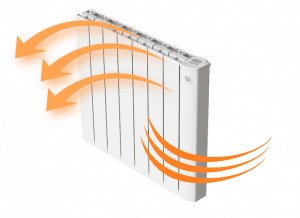
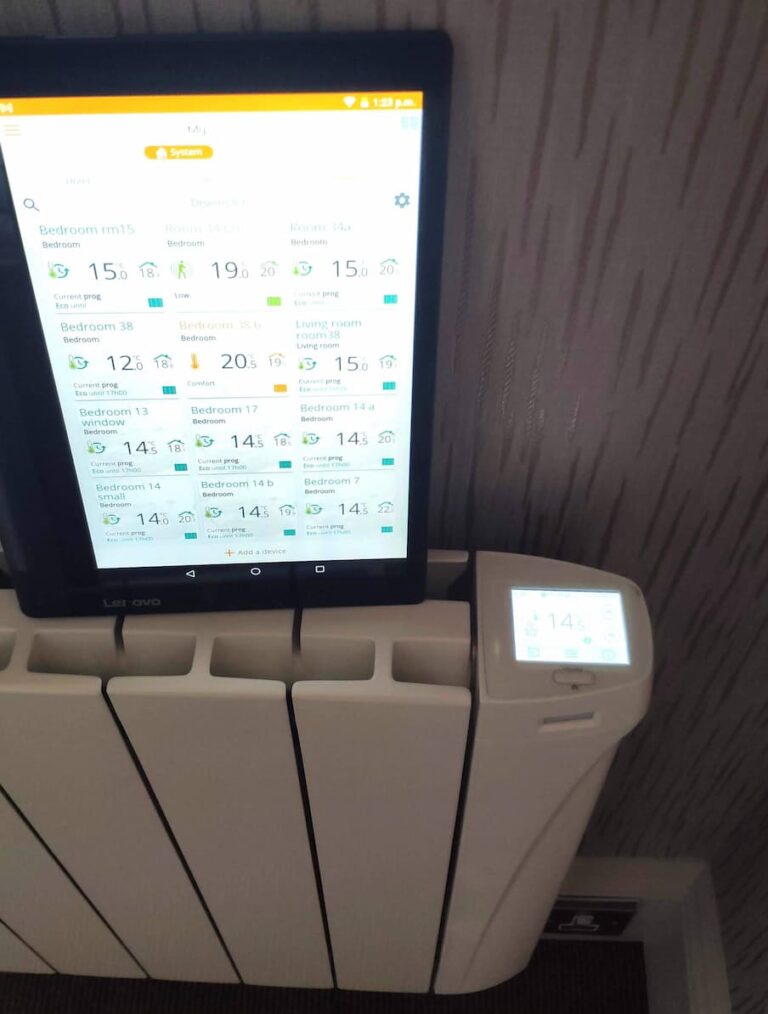
An electric radiator with a built-in thermostat, programmer and Wi-Fi, so you can set temperatures and schedules from an app and see how much energy each room uses. Learn more
IoT heating management
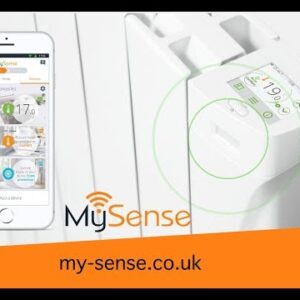
Connecting every radiator in a home or building to a cloud platform, so heating can be zoned, scheduled, locked and monitored remotely. MySense is our IoT heating management app. Learn more
Zoning
Heating rooms or groups of rooms to different temperatures and schedules, so you only heat the spaces in use. Learn more
Storage heater
A heater that charges ceramic bricks with cheaper night-time electricity and releases the heat during the day, which makes it hard to control when and where heat is delivered. Learn more
Economy 7
An electricity tariff with seven hours of cheaper night-time rates, traditionally used with storage heaters. Smart radiators heat on demand, so check which tariff suits you. Learn more
Thermodynamic fluid
A heat-transfer fluid sealed inside some electric radiators. It spreads heat evenly across the radiator and helps it hold warmth after the element switches off. Learn more
ACS (Advanced Condensing System)
IntelliHeat’s two-phase heat transfer technology: a fluid evaporates, rises and condenses inside the radiator, so it starts heating within 60 seconds. Learn more
Class II
A double-insulated electrical appliance that does not rely on an earth connection for safety. Learn more
Radiant heat
Heat that travels as infrared energy and warms people and surfaces directly, rather than only heating the air. Learn more
kW and BTU
Units of heat output used to size radiators. 1 kW is about 3,412 BTU per hour. Learn more
Part L and the Future Homes Standard
Part L of the Building Regulations covers the conservation of fuel and power. In England, the Future Homes Standard tightens it so new homes are built for low-carbon heating. Learn more
UKCA marking
The UK Conformity Assessed mark, showing a product meets the rules for sale in Great Britain. Learn more
Solar PV
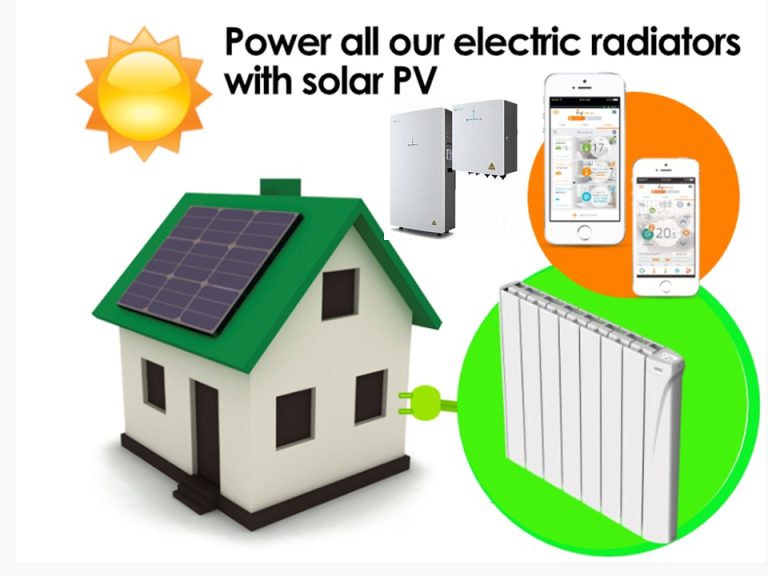
Solar photovoltaic panels turn sunlight into electricity, which can power electric radiators directly or be stored in a battery for later. Learn more

Electric heating efficiency

8 Ways to Make Electric Heating More Efficient

Simple steps that cut your bills and carbon emissions, whatever heating you have today.
  1. 01Heat only the rooms you useZone your home and set schedules for each room, so empty rooms stay at a lower background temperature.
  2. 02Turn the temperature down a degreeMost people are comfortable between 18 and 21 °C. Every degree lower reduces the energy you use.
  3. 03Let the radiator sense wasteOpen window detection and presence sensors stop heating automatically when a window opens or a room empties.
  4. 04Replace old storage heatersStorage heaters charge overnight whether you need the heat or not. Controllable radiators heat on demand.
  5. 05Size each radiator correctlyAn undersized radiator runs flat out; an oversized one wastes money up front. Calculate the kW each room needs.
  6. 06Check your electricity tariffA tariff that matches when you use heat can make a real difference. Compare plans before winter.
  7. 07Add solar PV and a batteryGenerating and storing your own electricity reduces how much you buy from the grid.
  8. 08Watch your energy dataAn app that shows each room’s energy use helps you spot waste and fine-tune schedules.

Electric heating questions

Electric Heating FAQs

Electricity usually costs more per kWh than gas, but electric radiators turn almost all the electricity they use into heat in the room, need no boiler servicing, and let you heat only the rooms in use. Your tariff, insulation and whether you have solar PV make the biggest difference. Read which is cheaper: gas or electric heating?

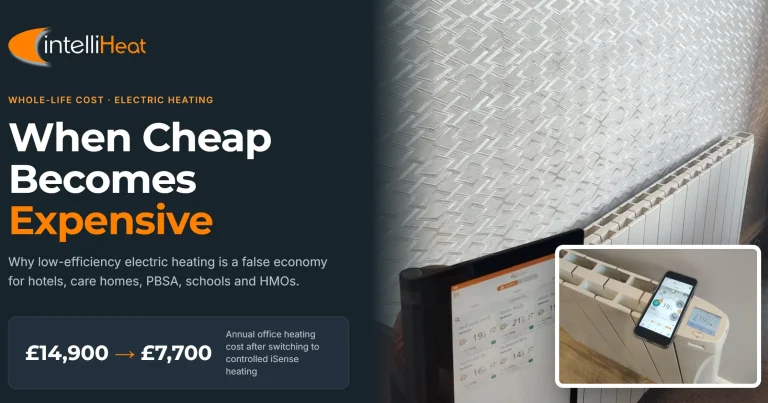
Multiply the radiator’s power in kW by the hours it heats and your unit rate. For example, a 1 kW radiator heating at full power for 4 hours at 25p per kWh costs £1. In practice the thermostat cycles the element on and off once the room is warm, so the real cost is usually lower. See our whole-life cost guide.

At the point of use, electric radiators are close to 100% efficient, because almost all the electricity becomes heat. Real savings come from controls: room-by-room schedules, open window detection and presence sensors stop you paying to heat empty rooms.

Lot 20 is the ecodesign regulation for local space heaters, in force since 1 January 2018. Fixed electric heaters must have electronic room temperature control plus energy-saving features such as a weekly timer, open window detection or presence detection.

There is no general legal requirement to remove working storage heaters. Many people replace them because they charge overnight whether or not you need heat the next day. Controllable electric radiators heat on demand and are easier to manage.

A smart electric radiator has a built-in thermostat, programmer and Wi-Fi, so you can control it from an app, set schedules for each room and see how much energy it uses.

IoT heating management connects every radiator to a cloud platform, so you can zone, schedule, lock and monitor heating across a home or a whole building from one app. It is widely used in care homes, hotels, offices and rental properties.

Yes. Electric radiators can use electricity from solar PV panels directly, or from a battery that stores solar energy for the evening. This reduces how much electricity you buy from the grid.

It depends on the room’s size, insulation, windows and how warm you like it. A heat-loss calculation gives the kW each room needs. Use our kW and BTU guide or ask our team for a free heating design.

Electric radiators burn no fuel in your home, so they produce no local emissions, and their carbon footprint falls as the UK grid uses more renewable power. Pairing them with solar PV or a renewable tariff lowers it further.

Not necessarily. Economy 7 suits storage heaters that charge at night. Smart radiators heat when you need it, so compare tariffs based on when your household uses most electricity.

Yes, if they are Wi-Fi enabled. A heating app lets you change temperatures, set schedules and check energy use from anywhere.

Electric radiators need very little maintenance. There is no boiler, flue or gas safety check, and no water system to bleed or flush.

The Future Homes Standard tightens the energy and carbon rules for new homes in England, so they are built for low-carbon heating rather than fossil-fuel boilers. Read our explainer.

Call our team on 020 3916 0000 or use our contact page for free advice and a heating design. You can also download our 2027 product brochure.

More answers in our smart electric heating FAQs.

Free expert advice

Talk to an Electric Heating Specialist

Get free advice and a heating design for your home or building, or download our latest brochure.